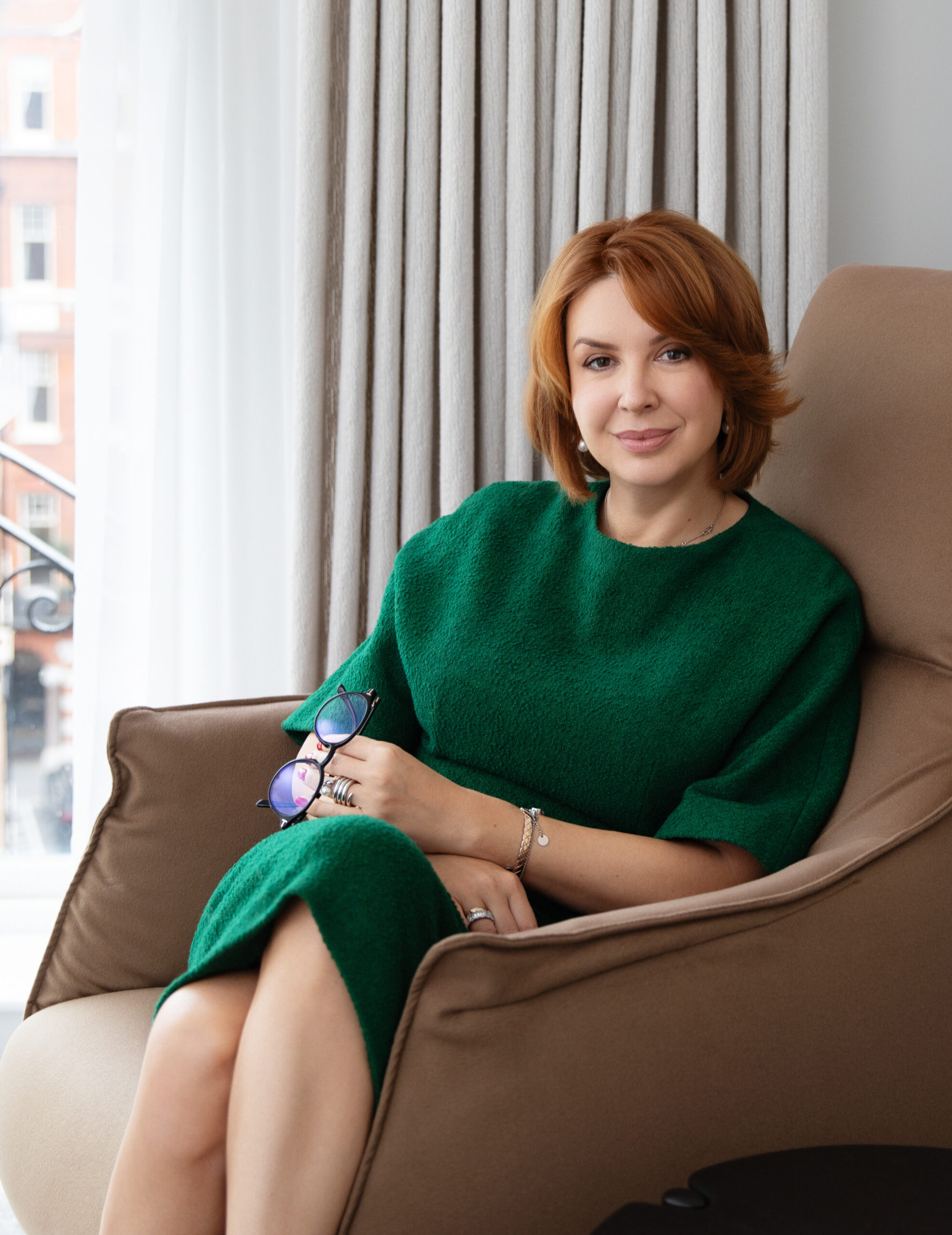
A Special Interview with Olena Lukyanova, founder of Find Your Light
Your own life has taken you across several countries and cultures. How did those personal experiences inspire you to create Find Your Light?
My personal experiences had a direct impact on my decision to create Find Your Light. I was born into immigration, and I have lived across multiple cultures and different cities throughout my entire life. I was a child who travelled with my parents without understanding what was happening and why. Later, I became a mother who took her own children across countries, doing my best to make sure they would be all right, once again, without any understanding of what was happening to us or why.
While travelling, I met many people with similar life stories and the same questions about our struggle to be happy and to feel at home despite all our efforts. Some of us have never actually thought about culture. Many speak about culture and identity, yet often without knowing what these concepts actually mean for us. I dedicated several years to studying across different disciplines to understand what culture means for us, how migration affects our minds and bodies, and what cultural identity really is. I trained in Transactional Analysis, as a Jungian coach and as a Lifestyle Medicine advocate. I expanded my work through ancient practices, breathwork, meditation, and dreamwork.
Through the knowledge I gathered, I looked at my personal experiences, the experiences of my children, and the many people I know. I have created the programme that helps people like me to understand what migration means psychologically, how we can support ourselves while adapting to a culture, and, of course, how we can support our children through cultural transition without losing ourselves and our family connections.
Many people focus on the practical side of relocating abroad. Why do you believe the emotional and psychological side is just as important?
Of course, practical preparations are important. I see that there are many excellent services, like your company, that provide the best solutions and advice in the most difficult and confusing stages of life. But I am also aware that despite all that effort, many people who move to another country still share that they feel unhappy, disconnected, unable to feel at home, feeling lost, and completely burned out from caring about people around them.
This is not unusual. This topic is widely recognized in scientific literature. For example, one study I found particularly striking reported that 96% of the people who work abroad report at least one symptom of burnout, 86% have high levels of stress, and nearly half, around 48%, are lonely, lacking companionship in their new country.
There is nothing wrong with feeling this way. We are talking about cultural transition, a deeply human process. We are talking about changes in identity, our unresolved need to belong, grief and loss we often don’t have time to process, worries about our families, and responsibilities we carry. All of this creates confusion, exhaustion, and burnout, leaving us with little energy to take care of ourselves. The question I often hear is: ‘How did this happen? I am doing everything I can, nothing seems to work.’
I believe that giving attention to the psychological, or human, side of relocation, and understanding what is happening beneath the practical tasks, makes the whole process much easier. The starting point is accepting that relocation is psychologically very challenging. From there, once you begin asking yourself questions like ‘What should I expect? What do I need to know? How can I support myself through this? ’ you are already moving in the right direction.
You describe your programme as preventative rather than reactive. Why is it so important to prepare families before challenges begin to appear?
Unfortunately, I know that most people seek help when ‘things are falling apart’, or when they ‘have no strength to pretend everything is fine’. I always say that relocation does not start when you cross the border; it begins the moment you decide to move. While your mind is busy organizing finances, housing, educational and health support systems, your psychological relocation has already started without you even noticing it.
This is the very point where we need to invest time and energy into our wellbeing. The earlier you will become aware of what is happening internally, what emotional processes are going on unnoticed, and what it is you are trying to avoid feeling, the better equipped you will be to support yourself.
I designed my programme for people relocating alone or as a group. I speak to each adult family member about what is happening to them and also look at the family as one living system moving through transition together. I believe in transparency in relations between myself and the people I work with, and I am always honest with them in terms of their expectations and reality checks. The clearer you are about what lies ahead, without illusions and turning a blind eye, the easier transition becomes. And the earlier you get to this clarity, the better.
One of your most interesting concepts is “cultures as climates, identities as clothes.” Can you explain what that means and how it helps your clients?
I developed this framework to simplify very complex concepts of culture, identity, and our relations with both. Culture alone has more than 130 definitions across different scientific disciplines. This means that when people talk about culture, they probably speak about very different things.
I see cultures as climates. Imagine your heritage culture is the climate you grew up in. Throughout your life, you learned how to live in that particular climate. You adapted to its seasons, its temperatures, and its storms. In doing so, you created your identity, or as I see it, the clothes that help you to survive the complexities of the climate you grew up in.
Now imagine you relocate to another country. The culture changes, as I describe it – the climate changes. It makes sense that you would prepare by learning what the new climate is like. What temperatures will you face? What will you need to wear? But perhaps the most important question is: what happens to the clothes you already have?
The more you travel, the more your wardrobe grows. Your adaptations become choices rather than something that happens to you. I often say – you cannot dress well in the dark. Turn on the light and thoughtfully choose what you want to wear. But there is one idea that matters most: while your wardrobe grows and you learn to change your clothes to feel comfortable in different climates, you yourself do not change.
I enjoy working with this metaphor as it gives simplicity in talking about the most complex concepts – culture, identity, their conflicts, loyalty, resilience, and many more. People like it very much, it gives us clear shared language, and we often have fun talking about the most profound topics.
Children often adapt differently to international moves than adults. What should parents understand about supporting their children through these transitions?
Children not only adapt differently, but they also experience relocation very differently from adults. How they respond and what process they are going through depends greatly on their age and their stage of development. A young child, a teenager, and a young adult will all understand the change in different ways. The migration will interfere with the natural process of growing up and goes in parallel with complex developmental processes they are going through.
Many parents ask me why their children behave differently, why they seem to be distant, feeling disconnected, drifting apart, and alienated. Every child is unique, of course, and there are multiple factors that affect their life path, but I always recommend that parents understand what their child is going through emotionally at their particular stage of life.
In general, I encourage parents to talk to their children about the move, to discuss shared experiences, even when those conversations feel difficult. There is a great impact of such talks – you will normalize worries, fear of uncertainty, and, of course, share your own feelings and struggles. I ask parents to remember that children often don’t know how to name their grief, even if their losses are very real. What parents often see as ‘irritation’ or ‘acting out’ may simply be the way children can express their difficult emotions. When parents stay emotionally available, open and honest, they give their children both space and words to understand each other.
You may be surprised how mature and understanding our children are. They sense secrecy and tension through many clues you are unwillingly giving them. Your transparency and openness create a strong ground for future communication. And of course, it means that you will feel close and connected.
Many people assume coming home is the easy part, but your programme includes a dedicated “Coming Home” path. Why can returning be one of the hardest transitions?
I understand what you are talking about. Those of us who go to our ‘home’ country, or heritage culture, often underestimate how significant this transition can be. We inevitably change while living abroad. At the same time, our home country changes too, and so do the people we left behind some time ago. We return as different people to a place that is no longer the same as the one we left. That can often bring discomfort and unexpected challenges with adapting once again.
My ‘Coming home’ path goes one layer deeper. I developed it for those who want to explore deeper questions about cultural trauma, transgenerational inheritance, and unconscious memories we carry in our bodies without our awareness. This program is for those who already understand the influence of cultures and who are ready to look beyond the cultures and reconnect with who they really are, with who they are beneath all adaptations they have made since birth.
For me, this is the meaning of coming home: finding your way back to yourself.
If you could leave internationally mobile families with one piece of advice before they begin their next chapter, what would it be?
The deepest loyalty is always loyalty to yourself. Dream big, plan well, stay aware and connected to yourself, and enjoy your journey!
For more information, please visit www.witholena.com/find-your-light